Overview
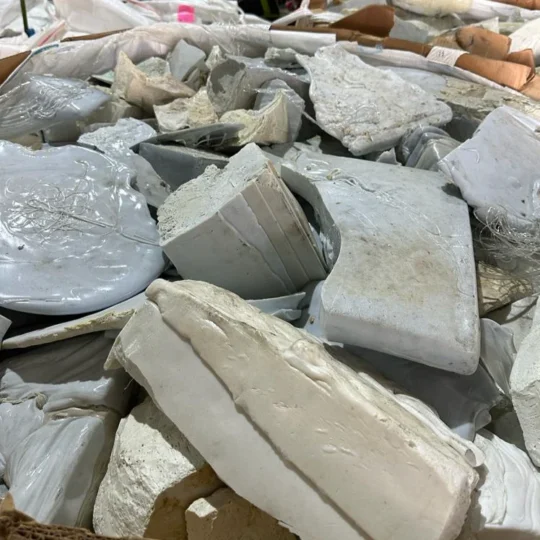
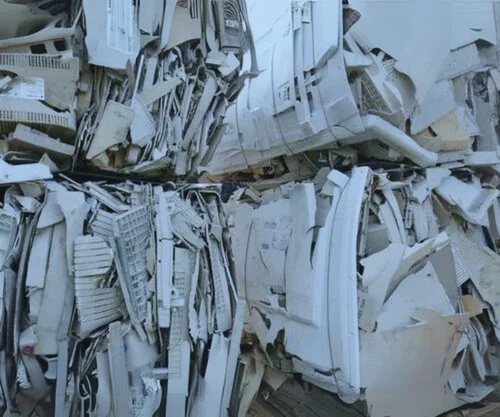
ABS (acrylonitrile-butadiene-styrene) is an engineering thermoplastic: a two-phase system with a rigid styrene-acrylonitrile matrix and dispersed polybutadiene rubber for toughness. White sheet scrap usually comes from point-of-sale, sanitary ware, equipment housings, or fabricated panels.
Sheet gauge, surface finish (gloss vs. matte), and any paint or protective film affect separation and melt quality. Flame-retardant grades exist in the market and are not visually distinguishable without documentation.
Recycling behaviour
Regrind can be repelletised; rubber phase can increase melt elasticity and die swell versus GPPS. Contaminants such as PMMA, PC, or PVC from mis-sorted sheet must be controlled to avoid degradation or odour.
Processing considerations
- Drying to reduce surface moisture and streaking
- Adequate venting for acrylonitrile and additive volatiles
- Filtration for glass fibre if FR or reinforced grades appear
Property recovery
Blending regrind with virgin ABS or using compatibilisers can restore impact and surface aesthetics for demanding parts.
Origin: South Africa.