Overview
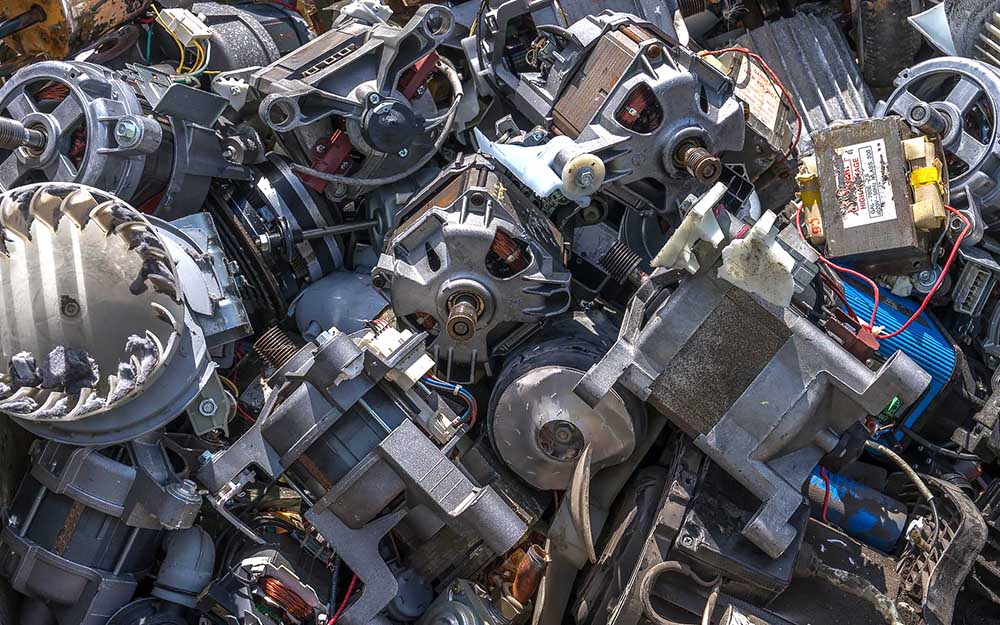
Electric motor scrap consists of end-of-life or surplus motors from industrial, commercial, or consumer sources. Value is driven by copper or aluminium conductor content in windings, electrical steel laminations in the core, and cast iron, steel, or aluminium housings and end shields.
Small domestic motors, fan motors, pump motors, and large industrial units differ sharply in copper weight fraction and dismantling labour. Gearmotors or pump assemblies may add lubricants and additional alloys.
Material breakdown
- Windings: high-conductivity copper or aluminium magnet wire
- Stator/rotor stacks: varnished silicon steel laminations
- Housings: cast aluminium, die-cast zinc in small motors, stamped steel
- Shafts and bearings: steel, sometimes brass cages
Recovery methods
Mechanical stripping, shear/ballistic separation, or smelting routes are used depending on scale and regulation. Open burning of windings releases toxic fumes and is widely prohibited.
Hazards
Residual oils from bearings, capacitors in some appliance motors (PCB or other dielectrics in legacy units), and sharp metal edges during dismantling require appropriate industrial hygiene and waste rules.
Origin: South Africa.